

Industry 4.0 in Cotton Swab Manufacturing Smart Production Lines 2026
Date: 8/15/2026 10:31:00 AM Click: 141
The Fourth Industrial Revolution—Industry 4.0—is reshaping manufacturing across every sector, and cotton swab production is no exception. While cotton swabs may appear to be simple products, their manufacturing process has become increasingly sophisticated, incorporating automation, data exchange, and intelligent control systems that were unimaginable just a decade ago.
In 2026, a "smart" cotton swab production line is defined by several key characteristics: fully integrated automation from raw material to finished package, PLC-based centralized control, servo-driven precision, real-time production monitoring, and quality inspection systems that catch defects before they reach the customer.
This article examines how Industry 4.0 principles are being applied to cotton swab manufacturing, what features define a smart production line, and what buyers should look for when evaluating equipment for a modern factory.
What Is Industry 4.0 in the Context of Cotton Swab Manufacturing?
Industry 4.0 refers to the integration of digital technologies into manufacturing processes. For cotton swab production, this translates into:
- Automation: Machines that perform tasks with minimal human intervention
- Connectivity: Systems that communicate production data in real time
- Intelligence: Controls that adjust parameters automatically based on feedback
- Traceability: The ability to track production metrics and quality data
Cotton swab manufacturing is inherently well-suited to Industry 4.0 adoption. The production process is highly repetitive and involves multiple discrete steps—cotton sliver preparation, stick feeding, cotton wrapping, drying, and packing—each of which can be automated and monitored.
Key Technologies Powering Smart Cotton Swab Production Lines
1. PLC-Based Centralized Control
At the heart of any smart cotton swab production line is the Programmable Logic Controller (PLC). Modern cotton swab making machines use PLC systems to coordinate all production stages—from material feeding to drying to packaging.
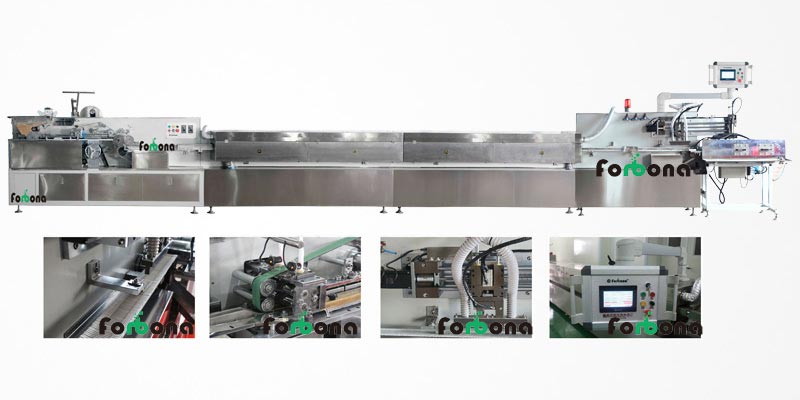
The FBN-01 Cotton Swab Making Machine, for example, incorporates a Japan Omron PLC system that manages the entire production sequence, ensuring consistent operation at speeds of 1000–1200 pieces per minute.
PLC control offers several advantages:
- Precision: Accurate timing of each production step
- Consistency: Reduced variability between production runs
- Flexibility: Easy adjustment of parameters for different product types
- Diagnostics: Real-time error detection and reporting
2. Servo Motor Technology
Servo motors have replaced traditional mechanical drives in advanced cotton swab production lines. The FBN-01, for instance, uses Taiwan Delta servo motors and drivers for precise motion control.
Servo technology enables:
- Accurate positioning: Essential for consistent cotton wrapping
- Speed control: Smooth adjustment of production speed
- Energy efficiency: Reduced power consumption compared to traditional motors
- Low maintenance: Fewer mechanical wear points
3. Human-Machine Interface (HMI)
Touch-screen HMIs have become standard on modern cotton swab machines. The FBN-01 features a Taiwan Weinview touch screen that allows operators to monitor production parameters, adjust settings, and access diagnostic information.
An effective HMI provides:
- Real-time production data: Speed, count, temperature, and other metrics
- Intuitive operation: Reduced training requirements for new operators
- Alarm management: Immediate notification of issues
- Data logging: Historical production records for analysis
4. Integrated Production Lines
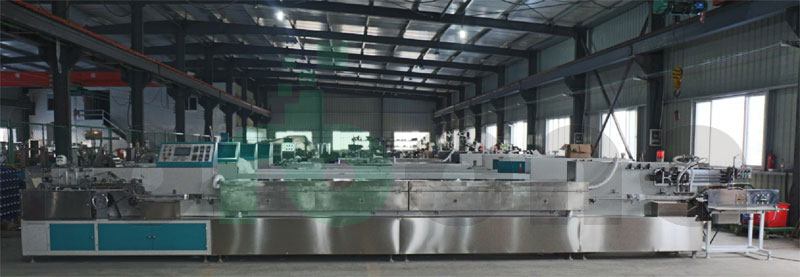
Industry 4.0 emphasizes the integration of previously separate processes. Modern cotton swab production lines combine making, drying, and packing into a single integrated machine.
This integration offers significant benefits:
- Reduced material handling: Less manual transfer between stations
- Smaller footprint: Less floor space required
- Fewer failure points: Fewer machines means fewer potential breakdowns
- Single-point control: Simplified operation and monitoring
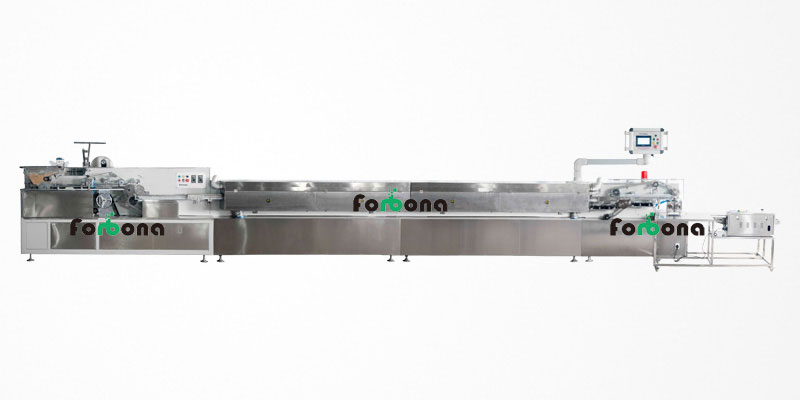
The FBN-01, for example, includes the cotton swab making machine, oven, and packing station in one unit, requiring only 2–3 operators to complete the entire operation.
5. Machine Vision and Quality Inspection
While not yet universal in cotton swab production, machine vision systems are increasingly being deployed for quality inspection. These systems use cameras and image processing algorithms to detect defects such as:
- Inconsistent cotton wrapping
- Misaligned swab tips
- Damaged or misshapen sticks
- Contamination
Some advanced systems integrate PLC, machine vision, and industrial robots for automated inspection and packaging. This represents the next frontier in cotton swab manufacturing automation.
From Automation to Intelligence: The Evolution of Cotton Swab Production
The journey from traditional to smart production can be understood in three stages:
1.Mechanization
Older cotton swab machines relied on mechanical systems—gears, belts, and cams—to control production. These machines required frequent manual adjustment and offered limited flexibility. The FBN-01 is explicitly designed to replace this "old-type design machine" with more modern technology.
2.Automation
Modern machines incorporate PLC control, servo motors, and HMI interfaces. They can run with minimal human intervention and produce consistent output. This is where most current cotton swab production lines operate.
3.Intelligence
The emerging frontier is intelligent manufacturing—machines that not only automate production but also collect and analyze data, predict maintenance needs, and automatically optimize performance. This includes:
- Predictive maintenance: Using sensor data to predict component failures before they occur
- Real-time quality control: Automated inspection and rejection of defective products
- Production optimization: Adjusting parameters based on real-time data
- Traceability: Recording production data for quality assurance
What Buyers Should Look for in a Smart Cotton Swab Production Line
For buyers evaluating cotton swab production equipment in 2026, the following features indicate a "smart" capable machine:
| Feature | Why It Matters |
|---|---|
| PLC control system | Enables precise, consistent operation and easy parameter adjustment |
| Servo motor drives | Provides accurate motion control and energy efficiency |
| Touch-screen HMI | Allows intuitive operation and real-time monitoring |
| Integrated design | Combines making, drying, and packing in one unit |
| Material flexibility | Ability to process plastic, paper, wooden, and bamboo sticks |
| Data output capability | Ability to connect to production monitoring systems |
| Component quality | Reliable components (Omron, Delta, Schneider) reduce downtime |
To explore all available options, review the available machine configurations and compare models side by side.
The Business Case for Smart Cotton Swab Production
Adopting Industry 4.0 principles in cotton swab manufacturing is not just about technology—it delivers tangible business benefits:
Reduced Labor Costs
Fully automatic integrated machines require only 2–3 operators, compared to older multi-machine setups that required more personnel.
Consistent Quality
Automated control reduces variability, ensuring each swab meets specifications.
Increased Throughput
Modern machines can produce 1000–1200 pieces per minute, maximizing output from floor space.
Flexibility
Smart machines can be reconfigured for different stick materials and swab shapes, allowing manufacturers to respond to changing market demands.
Data-Driven Improvement
Production data enables continuous improvement—identifying bottlenecks, optimizing settings, and reducing waste.

Challenges and Considerations
While the benefits are clear, manufacturers should also consider the challenges:
Initial Investment
Smart production lines typically require higher upfront investment compared to basic machines.
Training Requirements
Operators need training to effectively use HMI interfaces and interpret production data.
Integration Complexity
Connecting machines to production monitoring systems requires technical expertise.
Maintenance
While smart machines may require less routine maintenance, they require specialized skills for troubleshooting and repair.
Frequently Asked Questions
Q: What does Industry 4.0 mean for cotton swab manufacturing?
A: Industry 4.0 in cotton swab manufacturing refers to the integration of automation, digital control, and data systems into production lines. This includes PLC-based control, servo motor drives, touch-screen HMIs, and increasingly, machine vision and predictive maintenance capabilities.
Q: How does PLC control improve cotton swab production?
A: PLC (Programmable Logic Controller) systems coordinate all production stages—material feeding, cotton wrapping, drying, and packaging—with precise timing. This ensures consistent quality, reduces variability, and allows easy adjustment for different product types.
Q: What is the difference between automated and smart cotton swab production?
A: Automated production uses machines to perform tasks with minimal human intervention. Smart production goes further by collecting and analyzing data, predicting maintenance needs, and optimizing performance automatically. The FBN-01, for example, is automated but can be considered "smart-ready" with its PLC control and HMI interface.
Q: Can smart cotton swab production lines handle different stick materials?
A: Yes. Modern machines like the FBN-01 are designed to process plastic, paper, wooden, and bamboo sticks. This flexibility is increasingly important as the industry shifts toward sustainable materials.
Q: What is the production speed of a modern cotton swab machine?
A: Modern automatic cotton swab machines can produce 1000–1200 pieces per minute. The FBN-01, for example, has a maximum speed of 1200 pieces per minute and requires only 2–3 operators.
Q: What should I look for when buying a cotton swab production line?
A: Key factors include PLC control, servo motor drives, touch-screen HMI, integrated design, material flexibility, component quality, and data output capability for production monitoring.
Conclusion
Industry 4.0 is transforming cotton swab manufacturing from a labor-intensive process to a technology-driven one. In 2026, a smart cotton swab production line is defined by PLC-based control, servo-driven precision, integrated design, and increasingly, machine vision and data analytics capabilities.
For buyers evaluating equipment, the key is to look beyond basic functionality and consider:
- Control sophistication: Is the machine PLC-controlled with a modern HMI?
- Component quality: Are major components from established manufacturers?
- Integration: Does the machine combine multiple production stages?
- Flexibility: Can it handle different materials and product types?
- Data capability: Can it connect to monitoring and optimization systems?
The transition to smart manufacturing is not just about keeping up with technology—it is about building a production capability that can compete in an increasingly demanding market.
If you are evaluating cotton swab production equipment, review the available machine configurations and contact the manufacturer's support team to discuss your specific production requirements.