

Cotton Swab Machine Price Breakdown for Small Factory in 2026 | Forbona
Date: 6/11/2026 2:50:00 PM Click: 396
You've done the market research. The numbers on disposable hygiene products look promising—the global market is projected to grow from $206.52 billion in 2025 to $415.44 billion by 2034, driven by steady demand across healthcare and daily-use segments. The cotton swab category alone is on a similar upward track, with its global market expected to reach $4.46 billion by 2034.
But here's where many small factory owners get stuck: what does it actually cost to get a cotton swab production line up and running in 2026? If you're searching the web for a simple price tag, you'll find figures ranging from under $ 10,000 to over $50,000—and neither number tells the full story.
This guide strips away the confusion. Instead of quoting a single price, we'll walk through the full cost breakdown for a small-scale cotton swab manufacturing operation: the capital expenditure, ure, the ongoing operating costs, and—most importantly—the factors that separate a smart investment from an expensive mis.
Understanding the Full Cotton Swab Machine Cost Breakdown for 2026
Any discussion of equipment pricing needs to start with one foundational concept: Total Cost of Ownership (TCO). The upfront price is only the beginning. A cotton swab machine priced at $15,000 might end up costing significantly more—or less—than a seemingly comparable machine at $ 20,000, $20,000, once you factor in everything that follows.
Here’s what the complete 2026 cost breakdown actually includes:
-
Capital expenditure: The machine itself, plus shipping, import duties, installation, and any facility modifications.
-
Operating expenditure: Raw material inputs, labor, energy, maintenance and spare parts, and quality testing.
-
Soft costs: training, technical support access, and potential downtime during the learning curve.
According to data from multiple Chinese manufacturers, fully automatic cotton swab production lines in 2026 generally fall within the range of$ 9,000 to $ 24,0000 for a complete integrated system covering making, drying, and packaging. But within that range, the configuration varies dramatically—and so does what you actually get for your money.
Capital Investment Breakdown: What the Upfront Price Actually Includes
When a manufacturer quotes a price for a cotton swab production line, what exactly are you paying for? Understanding the individual components—and which ones are optional—is your first line of defense against unpleasant surprises.
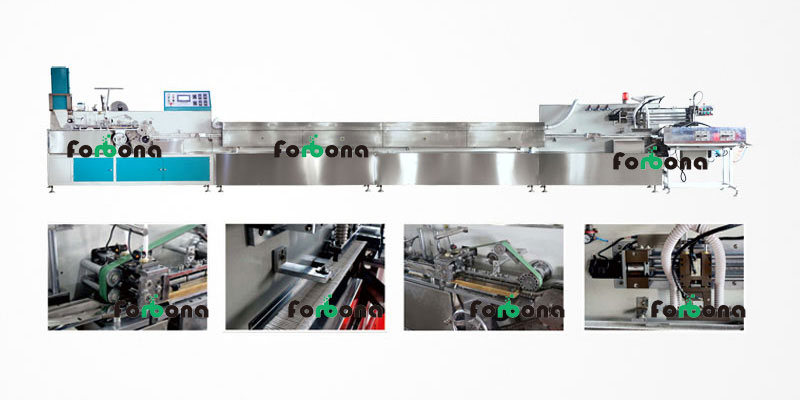
A complete cotton swab production line typically consists of three integrated components:
| Component | Function | Impact on Total Investment |
|---|---|---|
| Cotton swab making machine | Forms and twists the swab head around the stick | Core cost driver: speed and material compatibility determine price |
| Drying system | Cures or dries the swab heads depending on the material | Essential for medical-grade products; energy consumption varies significantly |
| Packing station | Counts and bags finished swabs | Automation level determines labor savings; modular options available |
Beyond these three core components,,2026 buyers should also inquire about:
-
Stick-feeding system: m:Does the machine support wood, paper, plastic, and bamboo sticks? Material flexibility typically increases upfront cost but reduces raw material sourcing risk.
-
PLC control interface: User-friendly controls reduce training time and operational errors—a feature that pays for itself quickly in labor efficiency.
-
Integrated vs. modular design:: Some suppliers offer all three components as a single integrated line; e; others sell them separately. Integrated lines generally cost more upfront but simplify installation and reduce inter-component compatibility issues
What this means for your factory:A lower-priced machine might exclude the drying system or packing station entirely—items you‘ll need to source separately at unpredictable cost and lead time. Always verify exactly what’s included before comparing quotes.
RawRaw Material Costs: The Hidden Variable in Production Cost
Many new factory owners focus exclusively on the machine price,, only to discover that raw material costs completely reshape their economics. Here's where the numbers get specific.
For daily-use cotton swabs, raw cotton is the single largest cost driver,, typically accounting for 30 to 40 percent of total production cost. Stick material comes second. For medical-grade swabs, s, the cost structure shifts further toward higher-grade cotton and sterile packaging requirements.
Here’s a realistic unit-cost framework for 2026 raw materials:
| Raw Material | Typical Cost Range(per 1,000 units of finished product) | Notes |
|---|---|---|
| Raw cotton | $0.25 – $0.45 | Primary cost driver: quality consistency matters |
| Raw cotton | $0.50 – $0.90 | Higher purity standards; RDs; regulatory compliance |
| Stick material | $0.15 – $0.35 | Material flexibility affects sourcing options |
| Packaging materials | $0.08 – $0.20 | Bulk ordering reduces per-unit cost |
| Finished unit FOB | $0.08 – $0.30 per 100-pack | Wide variation by quality, ality, order, volume, and type |
According to an IMARC Group cotton swabs manufacturing plan report, gross profit margins in this segment typically range between 35 and 45%, supported by stable demand and value-added applications. This suggests that raw material procurement strategy—not just equipment price—is a primary determinant of profit.
What this means for your factory:A machine that processes lower-cost materials or reduces material waste can deliver more bottom-line impact than a machine with a lower upfront sticker price. Evaluate equipment with an eye on material efficiency.
Labor and Energy Costs: Where Operating Expenses Accumulate
The decision between semi-automatic and fully automatic equipment isn’t just about speed—it’s about labor intensity. One trained operator can typically manage two fully automatic cotton swab machines,, depending on packaging requirements. In contrast, t, semi-automatic setups may require dedicated operators per machine, ne, multiplying your labor cost per shift.
Energy consumption adds another layer to the TCO calculation. For a standard fully automatic cotton swab production line, total power consumption is typically in the range of 9 kW for the complete line. Over a single 8-hour production shift at typical industrial electricity rates, that translates to roughly $7–$11 per day in energy costs—or $2,000–$3,000 annually for single-shift operation.
Here's a comparison of the two approaches in 2026 terms:
| Cost Factor | Semi-Automatic | Fully Automatic |
|---|---|---|
| Upfront equipment cost | $ 3,000–$ 10,000 | $ 9,000–$ 24,000 |
| Operators per machine | 1–2 | 0.5 |
| Labor cost | $6,000–$12,000+ | $3,000–$6,000 |
| Energy consumption | Moderate | Moderate–High |
| Operator training required | Lower | Higher initially, lower long-term |
Semi-automatic machines are generally more affordable upfront, making them suitable for startups with very tight capital constraints. However, the labor cost differential can close the gap within 12–18 months of operation, depending on your local wage rate.
Maintenance and Long-Term Ownership Costs
Equipment maintenance is the most frequently underestimated component of machine ownership. For well-built industrial systems, tems, annual maintenance and repair costs typically run between 2% and 5% of the equipment's replacement value. For lower-quality systems or machines operated beyond their intended duty cycle, that figure can jump to 15% or higher.
What contributes to these costs?
-
Spare parts availability: Machines from suppliers with established parts distribution networks reduce downtime when components fail.
-
Preventive maintenance schedule: Regular lubrication, calibration and wear-part replacement prevent catastrophic failures—but require discipline and access to technical documentation.
-
Supplier technical support: Remote troubleshooting and on-call engineering support reduce the cost of unplanned downtime.
Cotton swab production is highly automated; productivity is critically affected by any equipment downtime. Higher downtime and energy costs have a large impact on total production costs, as material costs are relatively low.
Practical Steps for Calculating YouFactory's Break-Even Point
Rather than simply comparing price tags, a more reliable approach is to calculate a simple Return on Investment(ROI) projection for your specific operation.
The basic ROI formula for equipment purchases is:
(Net annual benefit generated by new equipment ÷ Total equipment cost) x 100 = ROI percentage
Here’s a simplified worksheet approach for a small factory in 2026:
Estimate annual production output
-
Machine speed: 1,200 units/minute
-
Effective runtime: 900 units/minute
-
Daily output:432,000 units
-
Annual output:108 million units
Calculate annual revenue potential
-
Wholesale price per 100-pack:$0.15
-
Annual revenue:$162,000
Estimate operating costs
-
Raw materials:$64,800
-
Labor:$32,000
-
Energy:$2,160
-
Maintenance:$1,000
-
Packaging and overhead:$15,000
-
Total operating costs:$114,960
Calculate net benefit and ROI
-
Gross profit:$162,000 – $114,960 = $47,040
-
Equipment cost:$20,000
-
First-year ROI:($47,040 ÷ $20,000)x 100 = 235%
Note: This is a simplified illustrative model. Actual results vary significantly based on local labor rates, raw material pricing, competition, and operational efficiency.
According to the World Health Organization's 2025 medical device policy framework, regulatory compliance requirements for medical-grade products are evolving globally, which may add quality control and testing costs—also commanding premium pricing.
2026 Market Context: Why Now Is a Strategic Entry Point
Several converging trends make 2026 a particularly interesting year to evaluate cotton swab production equipment:
-
Market growth tail:: ind:The global cotton swabs market is experiencing steady growth, with an estimated CAGR of 4.4% from 2026 to 2034.
-
Automation push: Across disposable hygiene manufacturing,, automation is accelerating to address labor shortages and quality consistency requirements.
-
Material innovation: Energy-efficient motor-gearbox systems are reducing operational cost; some new models reduce energy consumption by 25% compared to traditional designs.
-
Supplier maturity: Chinese manufacturers have built extensive export experience, with many suppliers offering full customization and turnkey support.
The global textile machinery market—within which cotton swab production equipment sits—was valued at $30.8 billion in 2024 and continues to grow, driven by the increasing demand for automation in manufacturing processes.
From Cost Breakdown to Equipment Selection
You now have a framework for evaluating cotton swab production equipment beyond the surface-level price tag. The key takeaways for a small factory making a 2026 purchasing decision:
-
Total cost of ownership matters more than the initial quote. Include raw materials, labor, energy, and maintenance in your financial model.
-
Material compatibility affects long-term flexibility. Machines that support multiple stick types reduce raw material sourcing risk.
-
Automation level directly impacts labor cost. In rising-wage environments, the higher upfront investment in full automation often pays back faster.
-
Maintenance costs and spare parts availability determine uptime. A reliable supplier network is as valuable as the machine itself.
-
Market fundamentals remain favorable. Growing global demand supports reasonable payback periods for well-planned investments.
Once you have clarified these key decision factors—such as your target production volume, available floor space, material preferences and labor situation—comparing the specific specifications of available options becomes the next logical step. You can review Forbona's cotton swab machine series for integrated making, drying and packaging configurations designed for small-to-medium-scale enterprises, or explore the broader range of disposable products machinery to evaluate complementary equipment for your production line.
Related Reading
-
How to Evaluate Cotton Swab Machine Quality Before Purchase
-
Raw Material Sourcing Guide for Small Cotton Swab Manufacturers
-
Semi-Automatic vs. Fully Automatic Production Lines: A 2026 Comparison
-
Medical-Grade Cotton Swab Production: Regulatory and Quality Considerations
-
Disposable Hygiene Product Manufacturing: Complete Equipment Overview for Small Factories
This article is part of Forbona’s technical content library. No direct sales or pricing information is included. All technical discussions aim to help you make informed purchasing decisions.