

Fully Automatic vs Semi-Automatic Cotton Swab Machine Cost | Forbona
Date: 7/9/2026 2:46:00 PM Click: 343
You've done the market research. The global cotton swabs market was valued at approximately USD 899 million in 2025 and is projected to reach USD 1,143 million by 2032, growing at a CAGR of 3.5%. Demand is steady across healthcare, cosmetic, and household segments. But now comes the real decision: what kind of equipment should you put on your factory floor?
Walk into any used machinery marketplace or browse supplier listings, and you'll see a bewildering range of options—semi-automatic machines under $ 5,000, fully automatic lines pushing $50,000 or more. The price gap is obvious. What's less obvious is which machine actually costs less over time—and which one better fits your specific production goals, labor market, and growth timeline.
This guide breaks down the fully automatic versus semi-automatic cotton swab machine decision into five concrete dimensions: upfront investment, labor cost, production output, energy consumption, and maintenance. By the end, you’ll have a framework to match the automation level to your factory's reality—not someone else's.
Understanding the Real Cost Difference: Total Cost of Ownership
When comparing fully automatic and semi-automatic cotton swab machines, the first mistake is looking only at the purchase price. Total Cost of Ownership (TCO) —the sum of all costs over the equipment's useful life—is the number that actually matters to your bottom line.
A semi-automatic machine might cost $4,000 upfront while a fully automatic line costs $20,000. But if the semi-automatic machine requires three times the labor, produces half the output, and breaks down twice as often, the cheaper machine isn't cheaper at all.
Here's a high-level comparison of what each automation level typically includes:
| Decision Factor | Semi-Automatic Machine | Fully Automatic Machine |
|---|---|---|
| Typical price range(2026) | $4,000 – $13,000 | $9,000 – $24,000+ |
| Labor requirement | 2–4 operators per machine | 1–2 operators per machine |
| Production speed | 500–800 swabs/minute | 1,000–1,200 swabs/minute |
| Material handling | Manual feeding required | Automated feeding system |
| Packaging integration | Often separate/manual | Integrated drying + packaging |
| Operator training | Moderate | Higher initial, lower ongoing |
The price ranges above reflect real 2026 market data from verified suppliers. Entry-level semi-automatic systems can start below $ 2,000, while advanced fully automatic dual-head or sterile-packaging lines can exceed $20,000.
Upfront Investment: What You're Actually Paying For
The price difference between semi-automatic and fully automatic machines isn’t arbitrary. It reflects fundamentally different levels of engineering, integration, and capability.
Semi-automatic cotton swab machines typically handle the core swab-winding process automatically but require manual intervention for:
-
Feeding sticks into the production line
-
Loading cotton sliver
-
Transferring swabs to drying or packaging stations
-
Counting and bagging finished products
This means the machine itself is simpler—fewer motors, fewer sensors, less complex control systems—which keeps the manufacturing cost down. A semi-automatic machine from a mid-tier supplier might fall in the $4,000–$13,000 range.
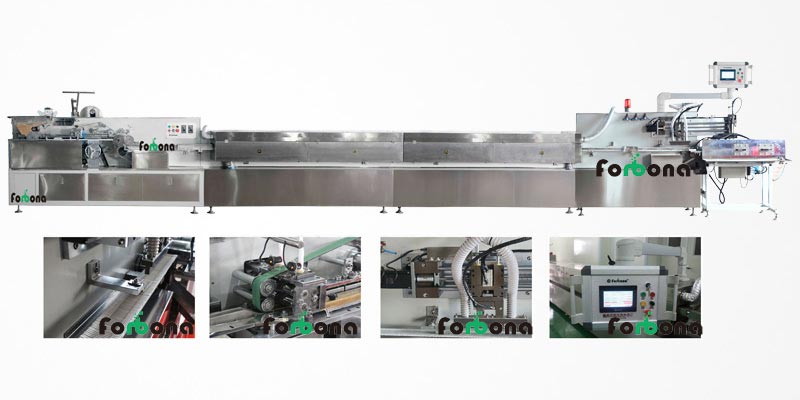
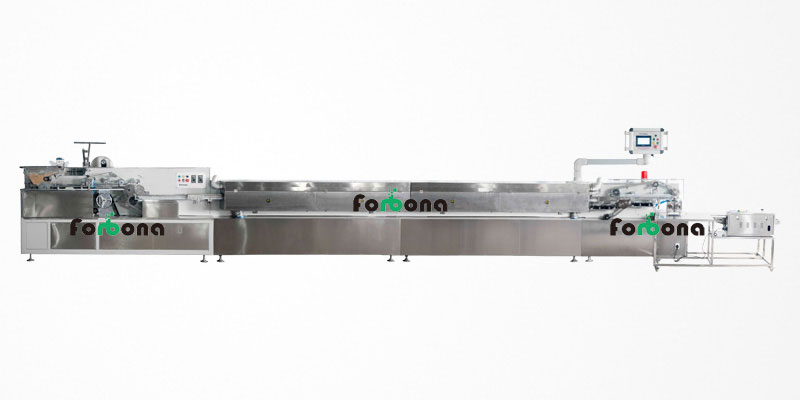
Fully automatic cotton swab production lines, by contrast, integrate multiple functions into a single continuous system:
-
Automatic stick feeding and alignment
-
Automated cotton wrapping and winding
-
Integrated drying oven
-
Automated counting and packaging
This integration requires more sophisticated engineering: PLC controls, servo motors, precision sensors, and stainless steel construction for hygiene. A fully automatic line from an established manufacturer typically ranges from $9,000 to $24,000.
The price spectrum reflects a clear tiering: entry-level semi-automatic systems start below $ 2,000, while advanced dual-head or sterile-packaging lines exceed $20,000.
Labor Costs: Where the Gap Widens or Closes
Labor is typically the highest ongoing cost in cotton swab manufacturing after raw materials. This is where the difference between semi-automatic and fully automatic equipment becomes most visible—and most dependent on your specific location.
Semi-automatic machines generally require 2 to 4 operators per machine to handle feeding, monitoring, and material transfer. In a single 8-hour shift at $8/hour, that's $128–$256 per day in labor costs—or roughly ** $ 32,000–$ 64,000 annually** for a single machine operating 250 days.
Fully automatic machines, by contrast, can be operated by 1 to 2 people. Some modern fully automatic lines are designed for “one-person-multi-machine” setups, where a single trained operator monitors two or more machines simultaneously.
Automated lines can cut labor costs by up to 70% compared to manual or semi-automatic processes. One fully automatic machine can do the work of 3 to 5 workers—without breaks, fatigue, or errors.
Here's a realistic annual labor cost comparison for a single machine operating one 8-hour shift:
| Cost Factor | Semi-Automatic(3 operators) | Fully Automatic(1.5 operators) |
|---|---|---|
| Operators per machine | 3 | 1.5 |
| Daily labor cost($8/hr × 8hr) | $192 | $96 |
| Annual labor cost(250 days) | $48,000 | $24,000 |
| Annual labor savings with full automation | $24,000 |
Production Output and Scalability
Speed matters—but not just for the sake of speed. Higher output per machine means fewer machines needed to hit your production targets, less floor space consumed, and greater ability to fulfill large orders or seasonal demand spikes.
Fully automatic cotton swab machines can produce 1,000 to 1,200 swabs per minute depending on the model. At 1,200 swabs/minute with 75% effective runtime (accounting for breaks and changeovers), a single machine produces approximately 432,000 swabs per 8-hour shift—or over 100 million swabs annually at 250 production days.
Semi-automatic machines operate at a fraction of that speed. While specific output varies widely by model and configuration, semi-automatic processes are significantly slower than fully automated ones. Automated machines are typically 5 to 10 times faster than manual or semi-automatic alternatives.
| Output Metric | Semi-Automatic | Fully Automatic |
|---|---|---|
| Speed | 500–800 | 1,000–1,200 |
| Daily output | 180,000–288,000 | 360,000–432,000 |
| Annual output | 45M–72M | 90M–108M |
| Machines needed for 100M annual output | 2–3 | 1 |
Energy Consumption and Maintenance
Two often-overlooked cost dimensions can significantly affect your TCO: how much electricity the machine uses, and how much it costs to keep it running.
Energy consumption: A typical fully automatic cotton swab production line draws approximately 8.5 to 9 kW of power, including the drying oven. At $0.12/kWh for industrial electricity and 2,000 operating hours per year, annual energy cost runs about $ 2,000–$ 2,200.
Semi-automatic machines generally consume less power because they exclude integrated drying and packaging systems. However, if you add separate drying and packaging equipment to a semi-automatic setup—which many factories must do—the total energy footprint may approach or exceed that of an integrated fully automatic line.
Maintenance:: For well-built industrial equipment, annual maintenance and repair costs typically run between 2% and 5% of the equipment's replacement value. On a $20,000 fully automatic machine, that's **$400$ 1,0000 annually**. On a $ 6,000 semi-automatic machine, it's $120–$300 annually—lower in absolute terms, ms, but higher as a percentage of the machine’s value.
How, maintenance isn't just about cost—it’s about downtime. A machine that breaks down frequently costs you lost production, whether it was expensive or cheap upfront. Fully automatic machines from established manufacturers typically feature more robust engineering and better component quality,, which can translate to fewer unplanned stoppages.
A Step-by-Step Framework for Choosing Your Automation Level
Rather than searching for a single “right” answer, use this five-step framework to evaluate which automation level fits your specific factory situation:
Estimate your target annual production volume
-
Under 50 million swabs/year → Semi-automatic may suffice
-
50–100 million swabs/year → Either option could work; run the numbers
-
Over 100 million swabs/year → Fully automatic is strongly recommended
Calculate your effective labor cost
-
Include wages, benefits, and turnover costs
-
If fully burdened labor cost > $6–8/, the labor savings from full automation typically justify the higher upfront investment within 18 months.
Assess your available floor space
-
Fully automatic lines are long but replace multiple separate machines.
-
If space is tight, an integrated line may be more efficient than separate semi-automaticc uni4: EvaluateEvaluate your material flexibility needs.
-
Do you need to switch between wood, paper, plastic, and bamboo sticks?
-
Fully automatic machines often support multiple stick types with minimal changeover
-
Material flexibility typically increases upfront cost but reduces sourcing risk.
Consider your growth timeline
-
If you plan to expand within 2–3 years, buying the fully automatic machine now avoids the cost of upgrading late.
-
If you're testing the market or operating on a very tight budget, semi-automatic offers lower entry risk.
Examples of practical application scenarios
Startup with limited capital and modest volume targets
A new factory in a region with $3–$4/hour labor costs plans to produce 30–40 million swabs annually for local distribution. The owner has limited capital and wants to validate demand before making a larger investment.
Key considerations:
-
Low labor cost reduces the urgency of labor savings
-
Modest volume target doesn't require maximum speed
-
Capital preservation is the priority
Recommendation: A semi-automatic machine in the $5,000–$8,000 range offers a lower-risk entry point. The owner can add automation gradually as volume grows and cash flow allows.
Established business entering cotton swab production with clear volume targets
A mid-sized hygiene products manufacturer plans to add cotton swabs to their product line with a target of 100 million swabs annually for medical and consumer markets. They operate in a market with $8–$10/hour labor costs and have existing facility space.
Key considerations:
-
Labor cost savings alone justify automation
-
Medical-grade production requires consistent quality and hygiene standards
-
Volume targets demand high-speed, reliable output
Recommendation: A fully automatic line in the $15,00$ 24,00000 range delivers lower per-unit cost at scale, reduced labor dependency, and integrated quality control features suitable for medical-grade products.
From Comparison to Equipment Selection
You now have a framework for evaluating fully automatic versus semi-automatic cotton swab machines across the dimensions that actually matter: labor, output, energy, and maintenance.
Thedecision isn'tt about which machine is “better”—it's about which machine is better for your specific situation. A semi-automatic machine is the right choice for a capital-constrained startup with low labor costs and modest volume targets. A fully automatic machine is the right choice for a business with higher labor costs, ambitious volume goals, or quality standards that demand integrated, consistent production.
Once you have clarified these key decision factors—your target production volume, available labor costs, space constraints, and growth timeline—comparing the specific specifications of available options becomes the next logical step. You can review Forbona's cotton swab machine series for integrated, making, drying, and packaging configurations, or explore the broader range of disposable products machinery to evaluate complementary equipment for your production line.
Related Reading
-
How to Calculate ROI for Your Cotton Swab Production Line Investment
-
Cotton Swab Machine Maintenance Guide: Keeping Your Production Line Running
-
Raw Material Sourcing for Cotton Swab Manufacturing: A 2026 Guide
-
Medical-Grade vs. Daily-Use Cotton Swabs: Production Requirements Compared
-
Disposable Hygiene Product Manufacturing: Complete Equipment Overview for Small Factories
This article is part of Forbona's technical content library. No direct sales or pricing information is included. All technical discussions aim to help you make informed purchasing decisions.